

A GUIDE TO SELECTING EQUIPMENT FOR HOME-BASED THERAPY
Microneedling uses controlled micro-channels to support natural skin renewal, collagen production, and improved absorption of skincare products. Different tools — derma rollers, stamps, and automated pens — are designed for different skincare goals and treatment styles.
This guide explains the key differences between professional-grade microneedling tools adapted for safe at-home use.

Choose Your Microneedling Pen
HOW TO CHOOSE MICRONEEDLING PEN
An electric Derma Pen is a high-speed, automated device designed for fractional mesotherapy.
Unlike manual tools, it uses an internal motor to drive a needle cartridge in a rapid, reciprocating motion
How it works:
The device performs thousands of vertical micro-punctures per minute.
This high-frequency automation creates a "vibrational" effect that masks pain signals to the brain while inducing maximum collagen production.
It is the gold standard for treating deep wrinkles, extensive scarring, and overall skin rejuvenation
STEP 1: MOTOR POWER AND SPEED VARIABILITY
Look for a device with at least 5 speed levels. Higher speeds are essential for minimizing pain on the face, while lower speeds provide better control when working on sensitive areas or using longer needle settings for the body
STEP 2: CORDED VS. WIRELESS FUNCTIONALITY
Consider your workspace. Wireless models offer total freedom of movement, which is helpful for reaching different angles of the face. However, ensure the battery life is sufficient (at least 2 hours) or that the device can function while charging (dual mode)
STEP 3: BUILD MATERIAL AND CARTRIDGES
Opt for an aviation-grade aluminum alloy body rather than plastic. Metal housings are more durable, easier to disinfect. Also, verify that replacement cartridges for the specific model are readily available and standardized
A key advantage of a Derma Pen is the speed and frequency of punctures. It can create significantly more micro-channels in less time, with no risk of the “hooking” or tearing often associated with manual rolling
Most pens feature a precision dial that allows depth adjustments from 0.25 mm to 2.5 mm. This versatility makes it possible to treat delicate areas, such as the skin around the eyes, as well as thicker skin on the cheeks or body using the same device
Professional-grade pens offer multiple speed settings (ranging from 8,000 to 18,000 RPM). A stable motor ensures that needles enter and exit the skin cleanly without lateral vibration
Choose Your Microneedling Pen

PROFESSIONAL USAGE TIPS

SPEED SELECTION
Use higher speeds for shorter needle lengths to maximize comfort, and moderate speeds for deeper settings to ensure the motor has enough torque for clean penetration

ADJUST DEPTH ON THE FLY
Use 0.25 mm for the forehead and nose, and increase to 0.5 mm or 0.75 mm for the cheeks and chin where the skin is thicker

GLIDE, DON'T PRESS
Let the motor do the work. Apply a hydrating serum (like Hyaluronic Acid) to create a "glide" and move the pen in circular or linear motions without applying downward pressure
WHAT TYPES OF CARTRIDGES ARE THERE?
A cartridge is the sterile, disposable needle head that attaches to your Derma Pen. It is the only part of the device that comes into direct contact with the skin, making its quality paramount to the safety of the procedure.
How it works:
The cartridge houses a cluster of needles that are propelled by the pen’s motor. These needles are mounted on a spring or piston mechanism that ensures they retract instantly after each puncture, maintaining the integrity of the skin's surface
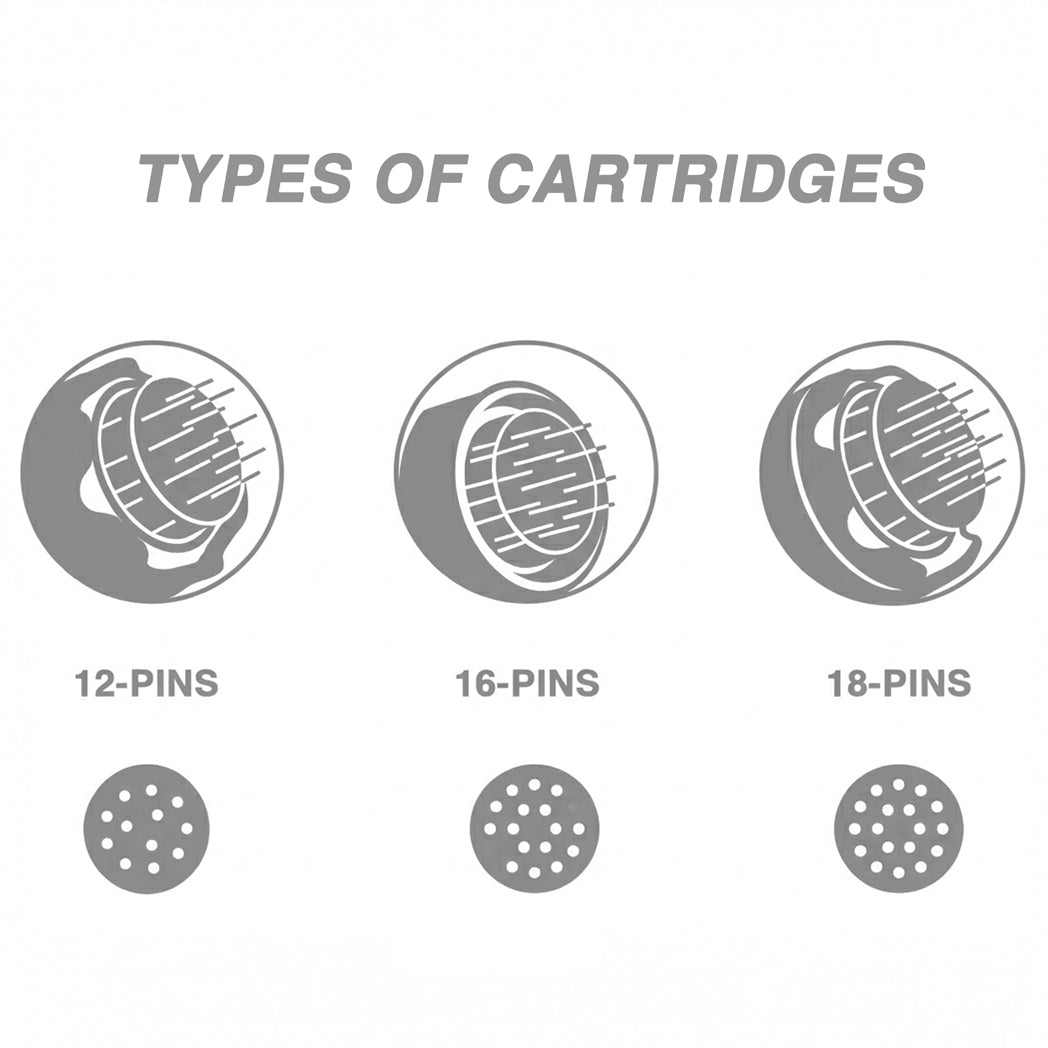
12/16/18-pins
Designed for precise, controlled treatments and smaller areas of the skin
Provides accurate contact and even coverage, making it ideal for refining skin texture and working on targeted zones with comfort and control
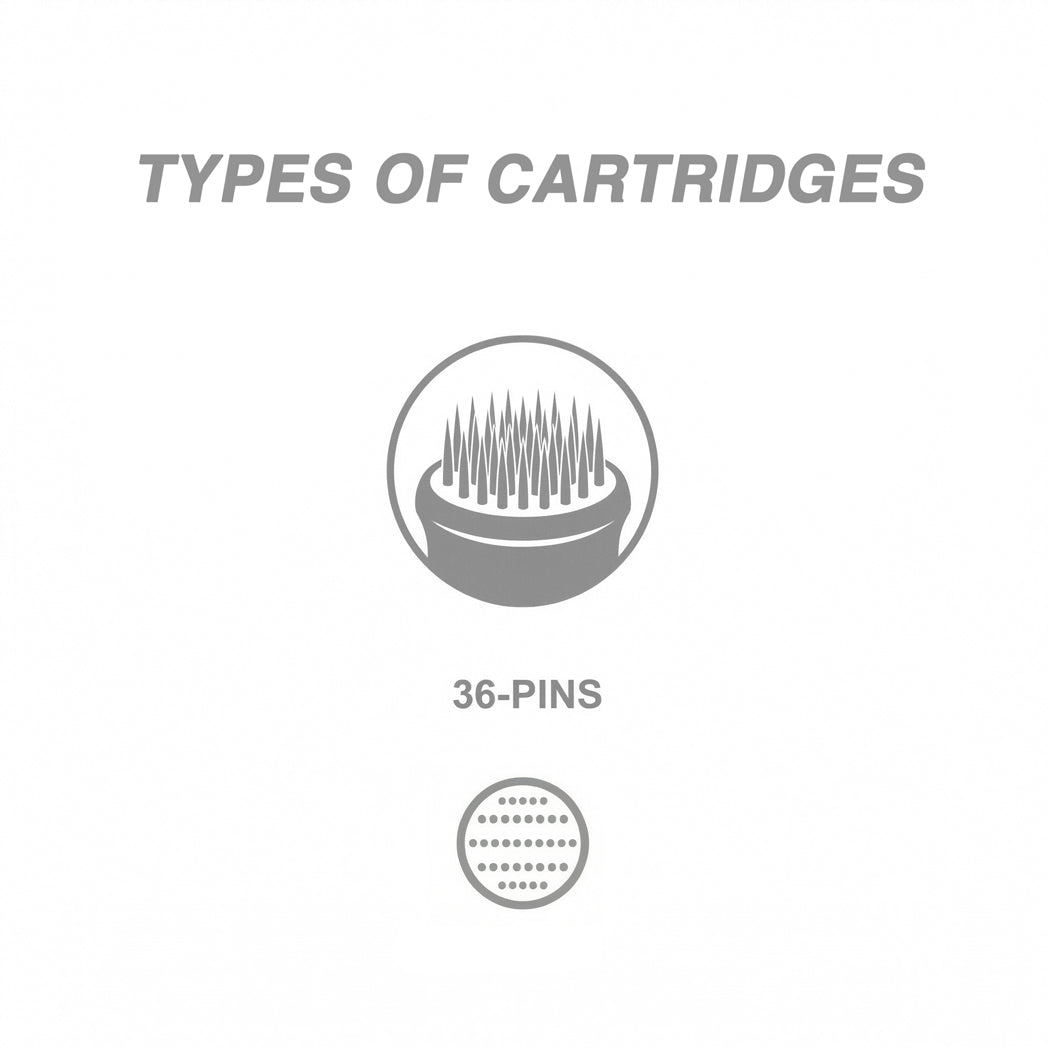
36-pins
Designed for faster coverage of larger zones
Helps enhance hydration and improve skin uniformity, making it a great choice for full-face or body skincare routines
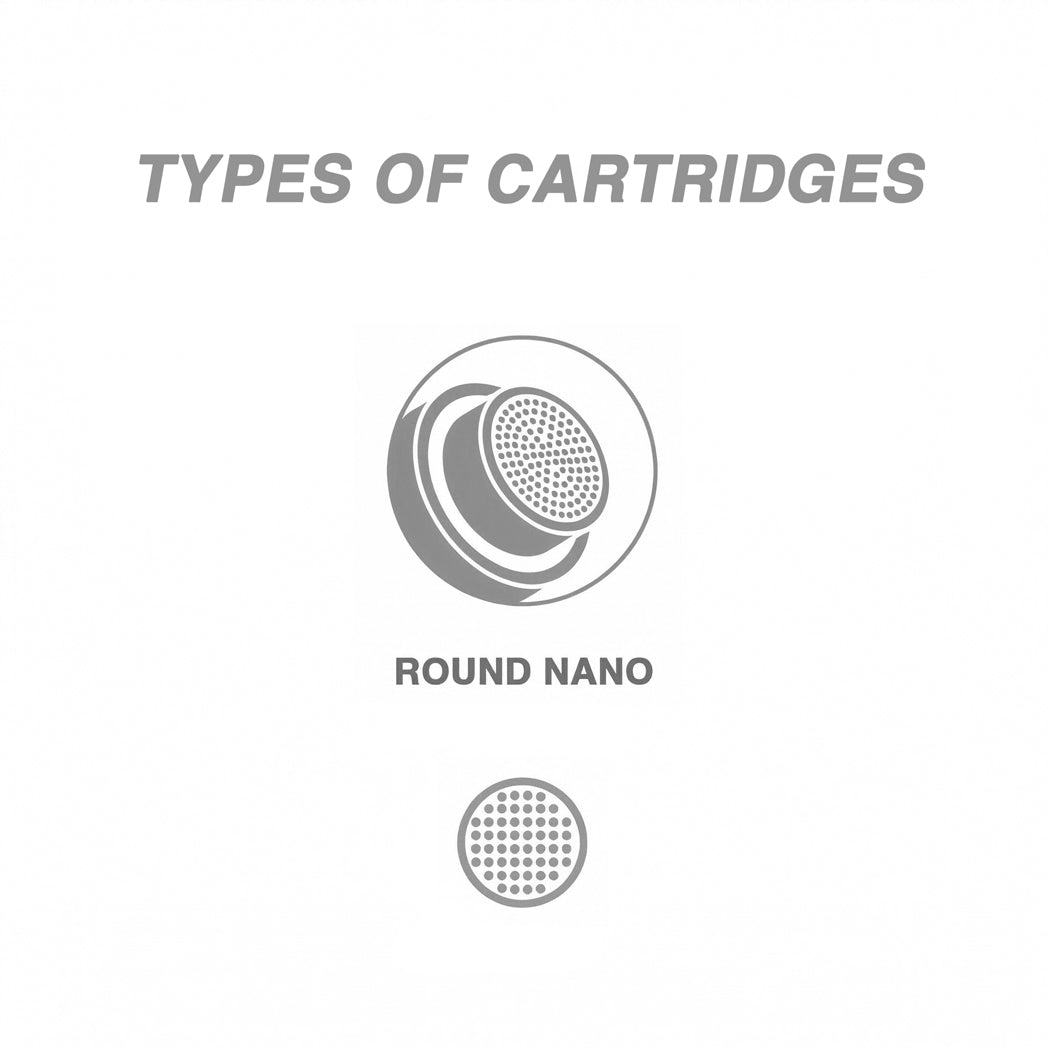
Nano-R
Designed with a smooth, round nano pattern for soft and even application
Ideal for sensitive facial areas, supporting better product distribution and a refined, refreshed skin look
Choose The Right Сartridges



HOW TO CHOOSE DERMA STAMP & ROLLERS
Manual microneedling devices, specifically derma rollers and derma stamps, are the foundation of at-home skin induction therapy. While they share the same goal of triggering skin regeneration, their mechanical approach differs significantly
How they work:
Both tools create micro-channels in the skin to stimulate the natural production of collagen and elastin. A Derma Roller uses a rotational drum to cover large areas quickly, while a Derma Stamp utilizes a flat needle bed for vertical, targeted application. These tools are ideal for improving skin tone, reducing fine lines, and maximizing the efficacy of topically applied serums
STEP 1: IDENTIFY YOUR TARGET AREA
If your goal is overall skin rejuvenation and "glow" for the entire face, a Derma Roller is the most efficient choice. If you are targeting specific imperfections like post-acne pits, deep wrinkles around the mouth, or localized stretch marks, a Derma Stamp offers the necessary precision
STEP 2: MATERIAL DURABILITY AND HYGIENE
Prioritize Titanium for longevity, especially in rollers, as the needles stay sharp for more sessions. Surgical-grade Stainless Steel is preferred for stamps due to its high resistance to bacteria and ease of sterilization. Ensure the needles are ultra-fine (0.2mm to 0.25mm gauge) to ensure a comfortable experience
STEP 3: FIXED VS. ADJUSTABLE OPTIONS
While most rollers have a fixed needle length, many modern derma stamps offer an adjustable dial. An adjustable stamp is highly versatile for home use, allowing you to switch from 0.25mm (for the forehead) to 0.5mm (for the cheeks) with a single twist
Choose Your Derma Stamp or Roller

They are highly efficient for treating broad areas like the cheeks, forehead, or thighs.
However, needles enter and exit at a slight angle, which requires a gentle hand to avoid unnecessary irritation
These tools feature a flat platform that ensures needles enter the skin at a strictly vertical 90° angle. This eliminates the "arc" motion of a roller, making stamps safer for sensitive areas or deep-set scars where precise, perpendicular penetration is required
For facial rollers, 192–200 needles are considered the gold standard. For stamps, a density of 30–140 needles allows for controlled pressure without causing a "rebound" effect from the skin
PROFESSIONAL USAGE TIPS
TECHNIQUE IS KEY
For rollers, use the "star" pattern (horizontal, vertical, and diagonal) without pressing too hard. For stamps, use a "press-and-lift" motion—never drag the stamp across the skin
REPLACEMENT SCHEDULE
Manual needles dull faster than automated ones. Replace your Derma Roller every 1–2 months and your Derma Stamp every 2–3 months to ensure clean, safe punctures
POST-PROCEDURE CARE
Focus on hydration. Use pure Hyaluronic Acid or Panthenol immediately after. Avoid swimming pools, saunas, and direct sunlight for at least 24–48 hours
THE STERILIZATION PROTOCOL
Immerse the device in 70% isopropyl alcohol for 10 minutes before and after every session. Never skip this step, as manual tools are reused multiple times

Compare Devices
 |  |  |  |  |  |  |  |  Dr. Pen M8 Microneedling Pen$119.99 | |
|---|---|---|---|---|---|---|---|---|---|
| General | |||||||||
Color |
|
|
|
|
|
|
|
|
|
Price |
$139.99 |
$99.99 |
$99.99 |
$19.97 |
$19.97 |
$17.95 |
$99.99 |
$129.99 |
$119.99 |
Benefits |
|
|
|
—
|
—
|
—
|
|
|
|
| Build & Hardware | |||||||||
Cartridge connector |
|
|
|
—
|
—
|
—
|
|
|
|
Pen material |
|
|
|
—
|
—
|
—
|
|
|
|
| Performance & Operation | |||||||||
Adjustable Needle Length |
|
|
|
|
|
|
|
|
|
RPM |
|
|
|
—
|
—
|
—
|
|
|
|
Speeds |
|
|
|
—
|
—
|
—
|
|
|
|
| Power, Design & Connectivity | |||||||||
Battery |
|
|
|
—
|
—
|
—
|
|
|
|
Battery Charging Time / Operation Time |
|
|
|
—
|
—
|
—
|
|
|
|
Low battery warning |
|
|
|
—
|
—
|
—
|
|
|
|
Power Supply |
|
|
|
—
|
—
|
—
|
|
|
|
Speed Display Screen |
|
|
|
—
|
—
|
—
|
|
|
|
Travel Package |
|
|
|
—
|
—
|
—
|
|
|
|
Wire lenght |
|
|
|
—
|
—
|
—
|
|
|
|
| Documentation | |||||||||
Download Manual |
—
|
—
|
—
| ||||||
100% AUTHENTIC DEVICES
Authenticity Verification
We are an official Dr. Pen distributor, offering only genuine and certified microneedling tools and accessories.
Beware of cheap counterfeits — only authentic Dr. Pen products ensure safety, durability, and outstanding results
You can verify the authenticity of your device on the official verification website: drpenreal.com
Official Certification
We are pleased to share that VAALEL GROUP LTD is an official dealer of Dr.pen, as confirmed by a statement from the brand owner.
Being an official dealer means not only guaranteed product quality, but also an extended warranty period.
Every customer is entitled to a 60-day return window and 365 days of support from our care team.
You can check our certifications on a dedicated page
We are an official Dr. Pen distributor, offering only genuine and certified microneedling tools and accessories.
Beware of cheap counterfeits — only authentic Dr. Pen products ensure safety, durability, and outstanding results
You can verify the authenticity of your device on the official verification website: drpenreal.com
We are pleased to share that VAALEL GROUP LTD is an official dealer of Dr.pen, as confirmed by a statement from the brand owner.
Being an official dealer means not only guaranteed product quality, but also an extended warranty period.
Every customer is entitled to a 60-day return window and 365 days of support from our care team.
You can check our certifications on a dedicated page


